
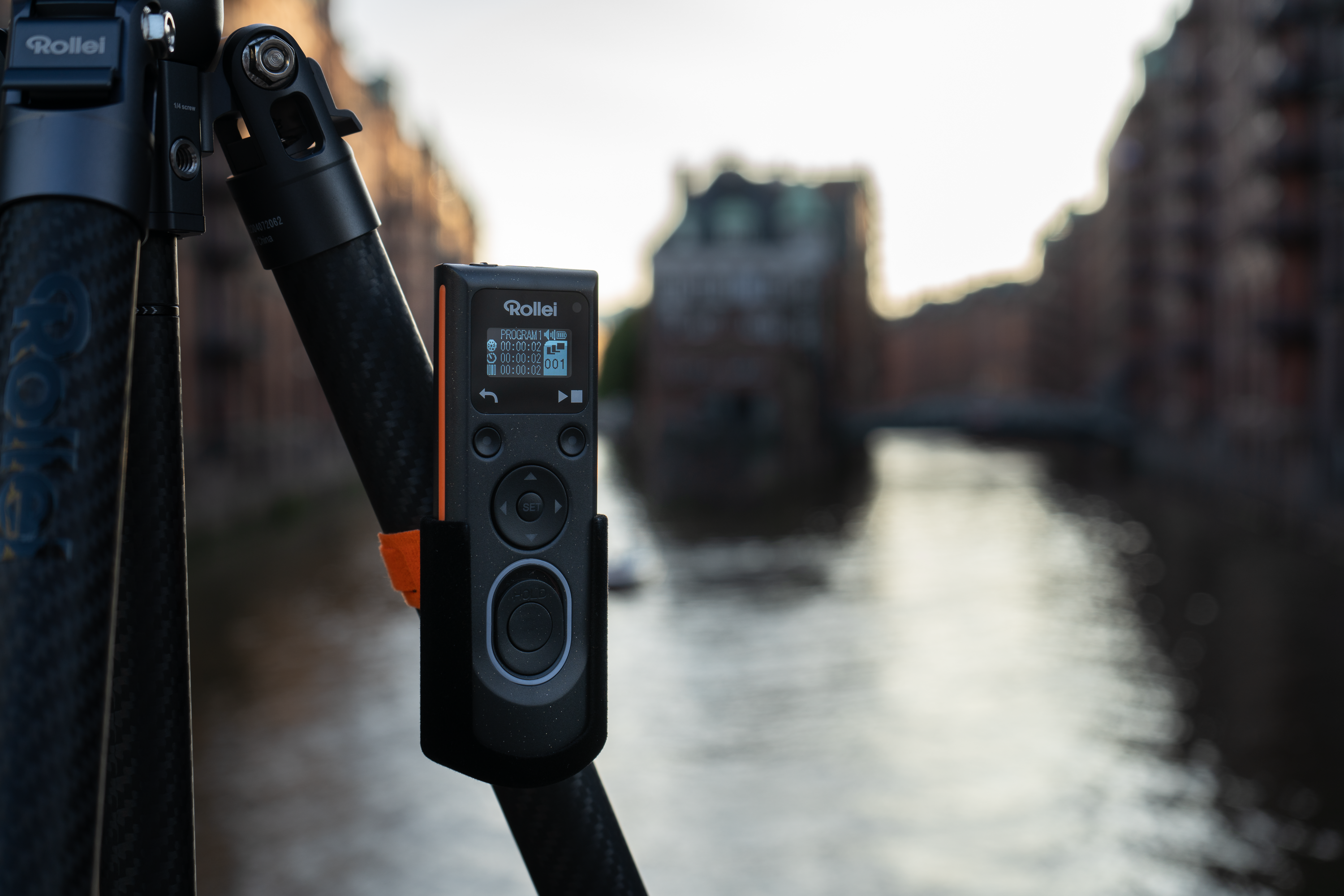
Remote Releases in Photography: An Indispensable Tool for Creative Shots
In the world of photography, there are countless tools and gadgets designed to enhance and simplify the art of taking pictures. One of these inconspicuous but extremely useful aids is the remote release, such as our Wireless Remote Release. In this article, you will learn why it should not be missing from your equipment, what advantages it offers, what to look for when buying, and what creative ideas you can implement with it.
Why use a remote release?
The use of a remote release offers numerous practical advantages that can expand the potential of your photography. It allows you to trigger photos without having to touch the camera. This reduces the risk of camera shake and ensures sharper images, especially with long exposure times. It also allows you to be part of your own shots without relying on the camera's self-timer.
Advantages of a Remote Release
- Avoidance of Camera Shake: Ideal for long exposures, night shots, or macro photography. A remote release allows the camera to be triggered without physically touching it, minimizing the risk of camera shake.
- Flexibility in Composition: You can position the camera wherever you want and capture the perfect moment from a distance. This is especially useful in situations where the camera is placed in hard-to-reach locations.
- Opportunity for Group Photos: No one has to be missing because they are operating the shutter. With a remote release, the photographer can include themselves in the group and trigger the photo at the right moment.
- Creative Potential: Experiment with exposure times without affecting the camera. This opens up a new dimension of creativity, especially with long exposures.
- Interval Shooting: For time-lapse shots, the remote release can be programmed to trigger at fixed intervals. This allows movements or changes in the scene to be captured over a longer period, which is particularly beneficial for landscape and astrophotography.
- Continuous Shooting: In fast-moving scenes, such as at sporting events or in wildlife photography, a remote release allows multiple shots to be taken in quick succession to capture the perfect moment.
- Bulb Exposure: For extremely long exposure times that exceed the maximum exposure times set in the camera, bulb mode (Bulb Exposure) allows manual control of the exposure time. With a remote release, the photographer can keep the shutter open for as long as necessary for the desired exposure, which is useful for night shots, star photography, or artistic effects.
What to look for when buying:
- Compatibility: Make sure the remote release is compatible with your camera. Compatibility is crucial as not all triggers work with every camera brand or model.
- Range: Check how far the remote release works, especially if you plan to take photos outdoors or in large spaces.
- Functions: Some models offer additional features such as time delay, interval shooting, or long exposure. Consider which functions are important for your photography.
- Type of Trigger: There are wired and wireless models.
- Operation: Pay attention to the user-friendliness and ergonomics of the remote release.
- Battery Life: For wireless remote releases, battery life is an important aspect. Check how long the trigger can operate on a set of batteries or a single charge to ensure it is suitable for longer photo sessions or travel.
10 creative ideas for using a remote release:
If you don't have any creative ideas at first, don't worry. We have collected 10 different ideas for you here and show you directly what the settings could look like and what equipment you might still need.
For all photographic activities involving long exposures or specific compositional requirements, a tripod is a must to ensure the best possible image quality. The combination of the right equipment and a remote release opens up a world of creative possibilities in photography.
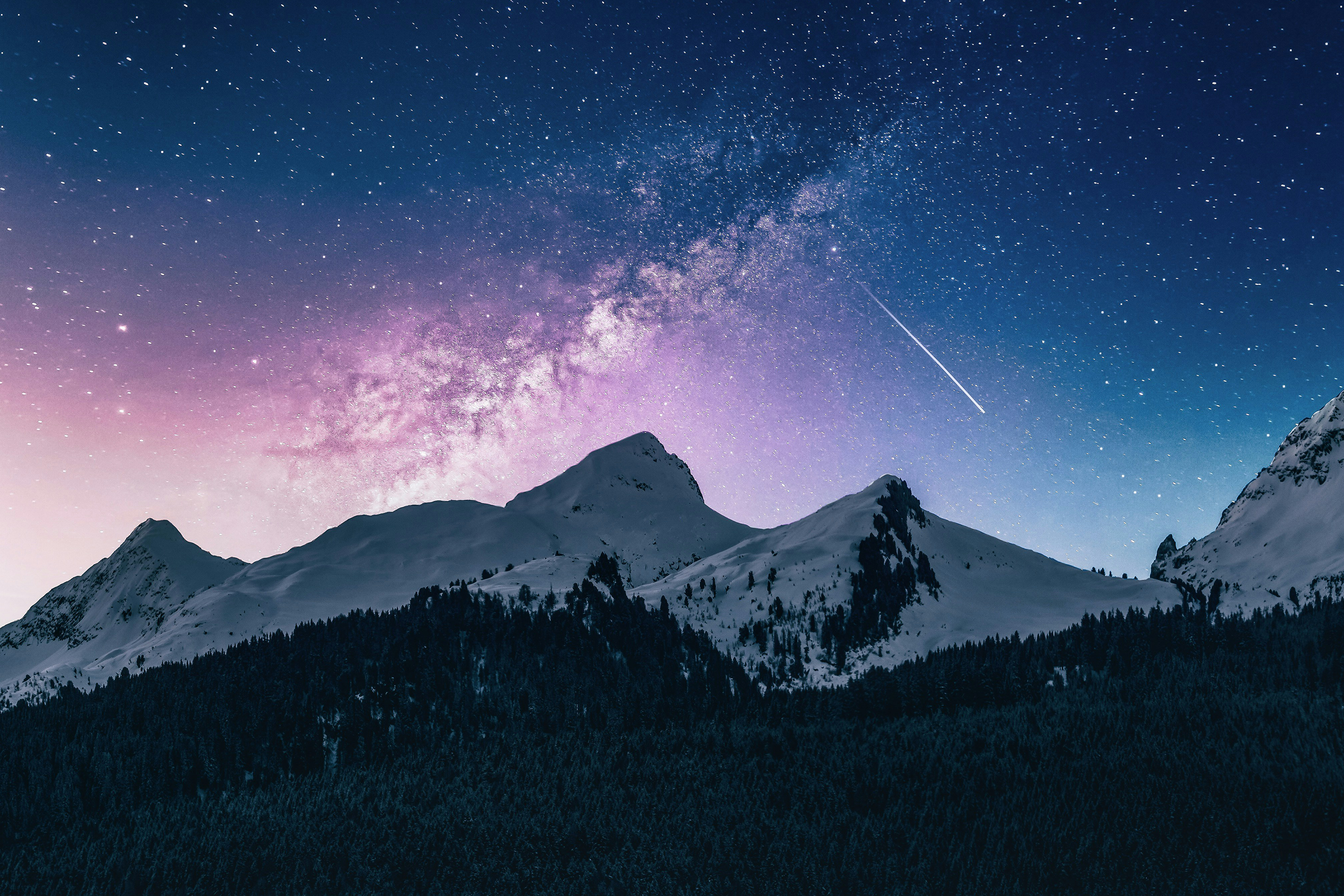
- Photographing Star Trails: Capture the movement of stars in the night sky without risking camera shake.
@Benjamin Voros
|
Example Setting |
Recommended Equipment besides the Remote Release |
Recommended Starting Settings |
|
Find a dark place with a clear view of the starry sky, far away from urban light pollution. Point your camera at a part of the sky with prominent stars or the Milky Way. |
A sturdy tripod is essential to securely hold the camera for long exposures. A wide-angle lens can help capture a larger portion of the sky. An intervalometer (if not integrated into the remote release) allows programming of continuous shots. |
Use manual mode, set ISO to 800-1600, aperture as wide as possible (e.g., f/2.8), and exposure time to 15-30 minutes to capture the movement of the stars. |
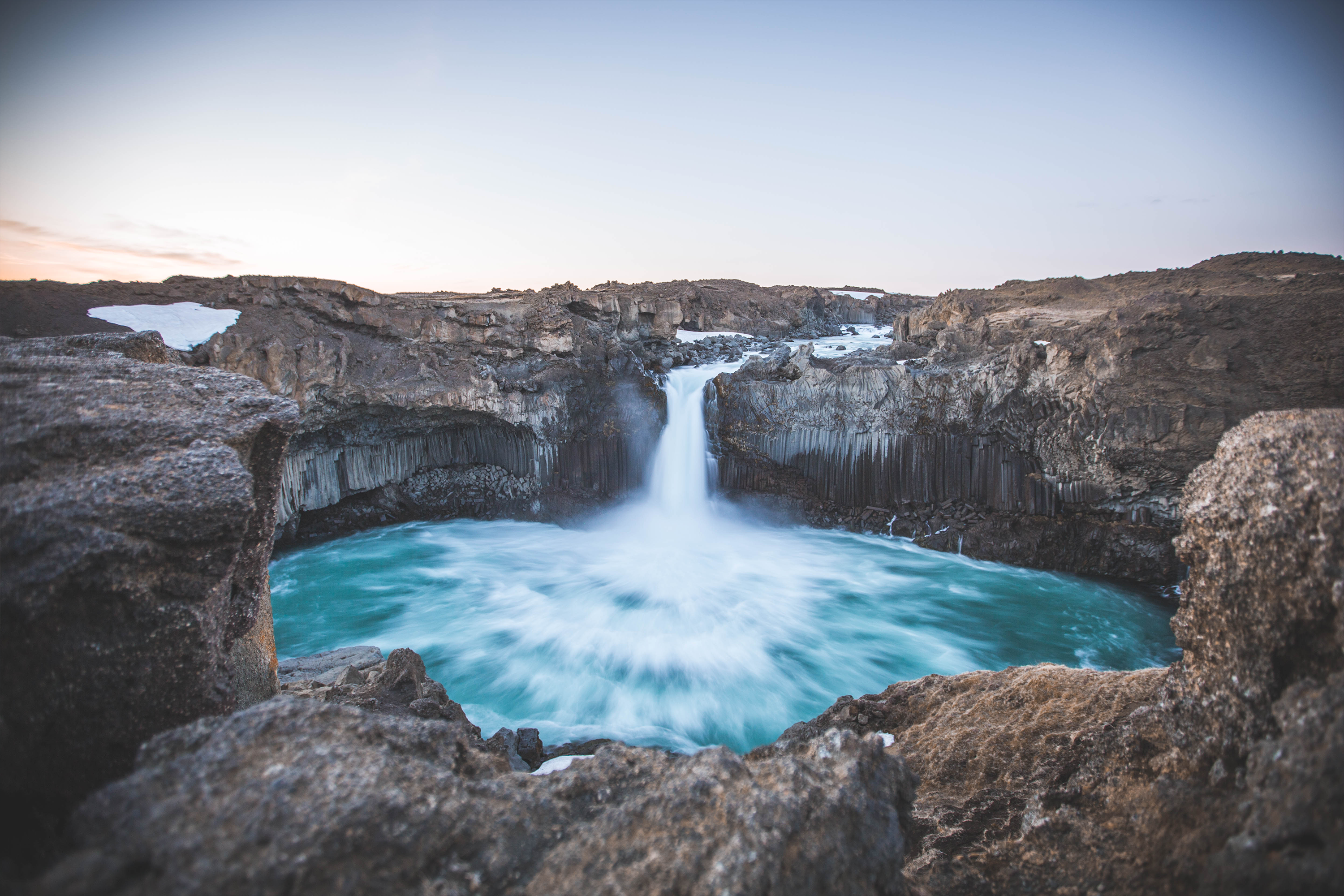
- Waterfalls with Soft Water: Achieve the popular soft effect on waterfalls without touching the camera.
@ Michael Kuschei
|
Example Setting |
Recommended Equipment besides the Remote Release |
Recommended Starting Settings |
|
Choose a cloudy day or a time when the waterfall is in shadow to avoid harsh shadows and overexposure. Place your camera on a tripod at a safe distance from the water. |
A tripod also provides the necessary stability here. ND filters (Neutral Density Filters) are crucial for enabling slow shutter speeds in daylight without overexposing the image. |
Keep ISO as low as possible, set aperture to about f/11 for depth of field, and choose an exposure time of 2-10 seconds, depending on the desired softness of the water. |
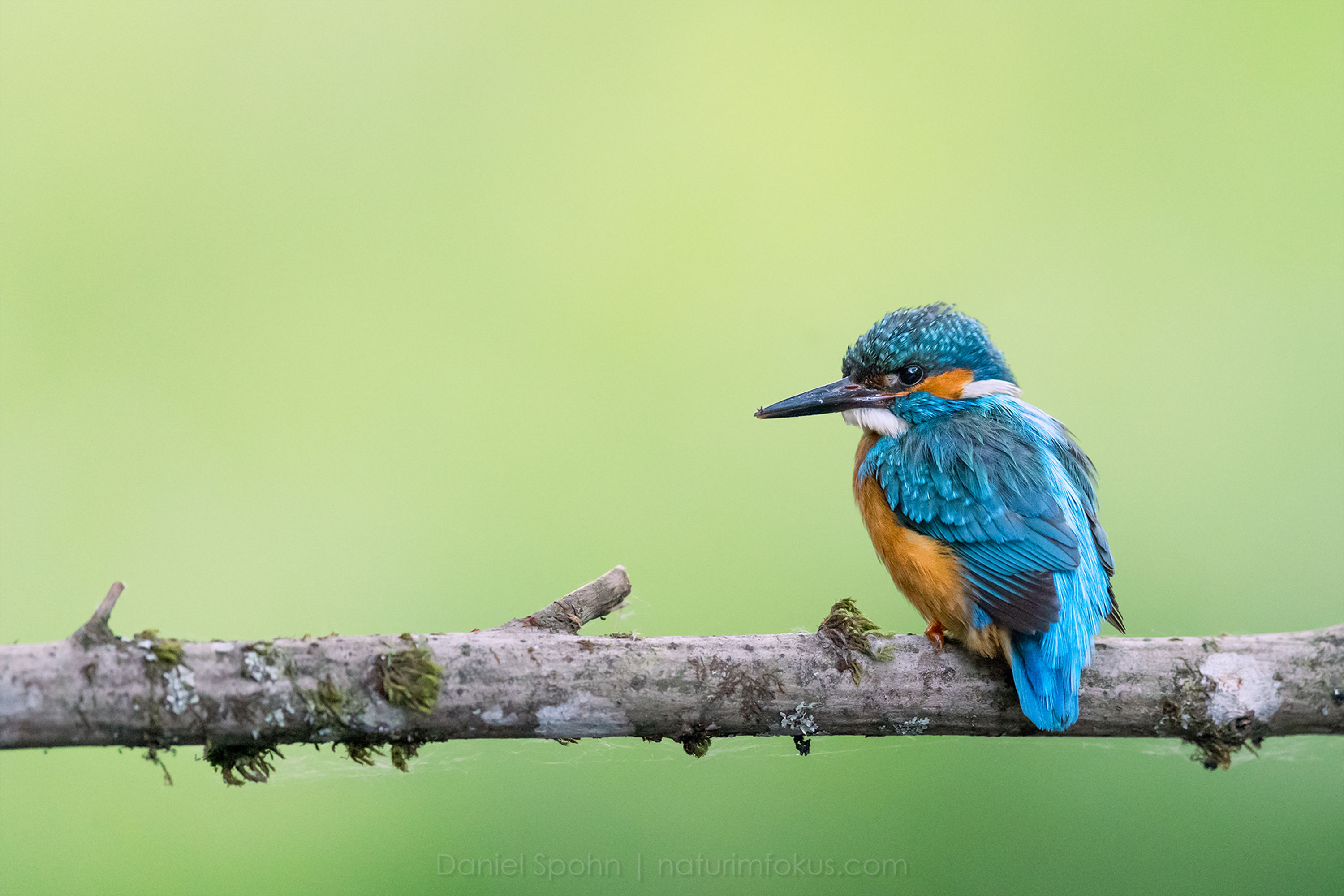
- Wildlife Photography: Place your camera near an interesting spot and wait for the perfect shot from a safe distance.
@Daniel Spohn
|
Example Setting |
Recommended Equipment besides the Remote Release |
Recommended Starting Settings |
|
Position your camera near a popular drinking or feeding spot in the wild, hidden and safe from curious animals.
However, please avoid disturbing the animals in their habitat. |
A telephoto lens is a great advantage here to bring animals closer from a safe distance. Camouflage materials can help to conceal the camera and possibly the photographer to avoid disturbing the animals. |
Choose a high ISO to capture fast movements, a wide aperture for fast shutter speeds, and use continuous shooting mode to take multiple images per second. |
- Self-portraits: Go beyond simple selfies and stage artistic self-portraits.

|
Example Setting |
Recommended Equipment besides the Remote Release |
Recommended Starting Settings |
|
Choose an interesting environment or background. Use natural light or studio lights to evenly illuminate your face and the scene. |
In addition to a tripod, creative lighting equipment such as softboxes, reflectors or LED ring lights can be used to control the light and minimize shadows. |
Set the camera to a timer or use the remote release for instant shots. ISO, aperture, and exposure time should be adjusted depending on the lighting situation. |
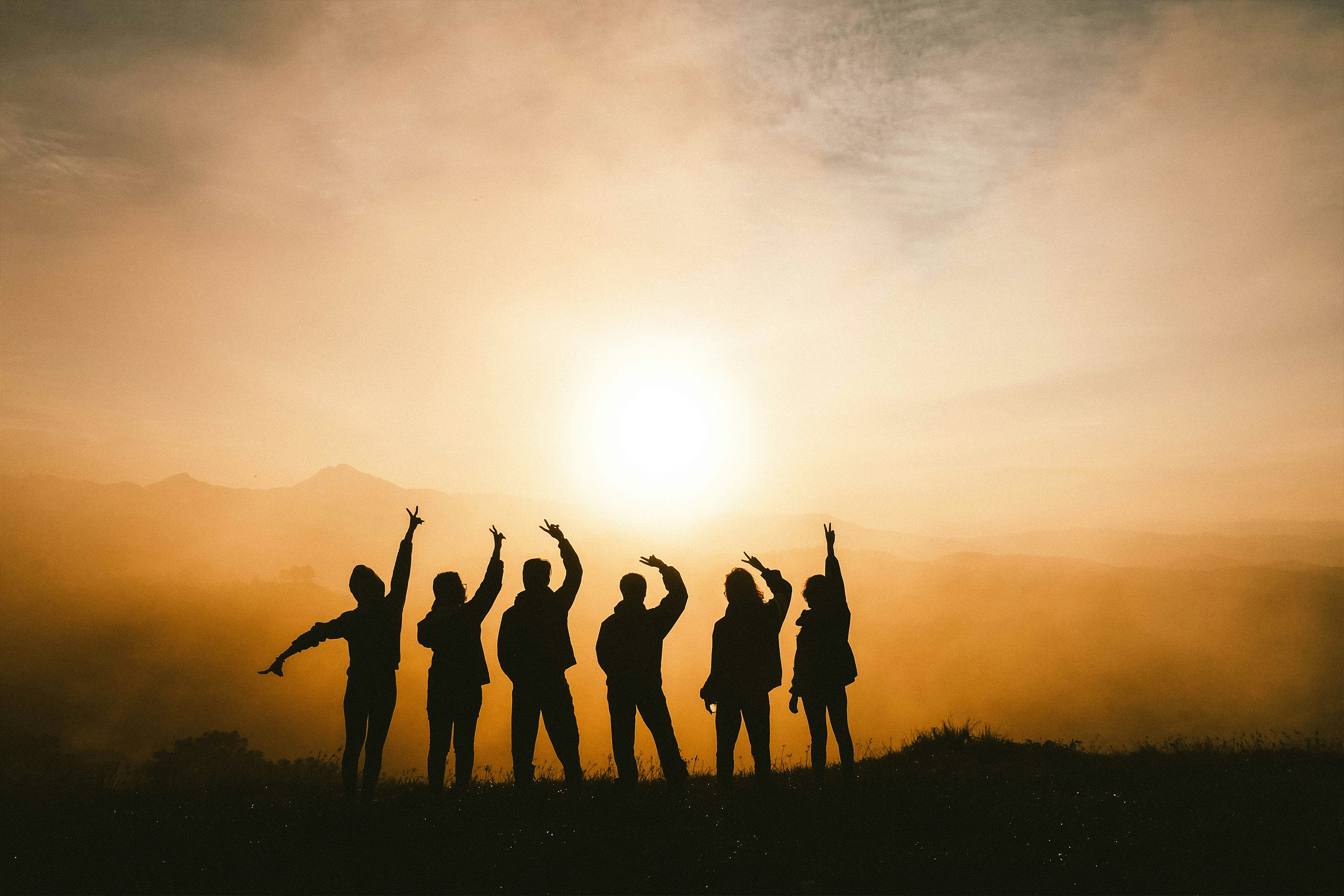
- Group photos without outsiders: Make sure everyone is in the picture, including the photographer.
|
Example Setting |
Recommended Equipment besides the Remote Release |
Recommended Starting Settings |
|
Choose a location that offers enough space for the group and look for an interesting background. Position the camera so that all people are clearly visible. |
A wide-angle lens can be useful for capturing larger groups. Flashes or portable LED lights can help to illuminate the scene evenly, especially indoors. |
Use a smaller aperture (e.g., f/8) to ensure all people are sharp. Set the camera to self-timer or use a remote release to trigger the photo. |
- Time-lapse recordings: Capture flowers blooming, the course of a sunset, or the setup of an event.

|
Example Setting |
Recommended Equipment besides the Remote Release |
Recommended Starting Settings |
|
Choose a scene with movement, such as a passing cloudscape, a sunset, or the setup of an event. |
A tripod is also indispensable here to keep the camera stable over longer periods. Additional batteries or an external power supply ensure that your camera lasts for the entire duration of the time-lapse recording. |
Choose a high ISO to capture fast movements, a wide aperture for fast shutter speeds, and use continuous shooting mode to take multiple images per second. |
- Long exposures during the day: Use ND filters for long exposures in daylight and trigger without shaking.

|
Example Setting |
Recommended Equipment besides the Remote Release |
Recommended Settings to Start With |
|
Look for a subject with movement, such as flowing water or passing cars. Use an ND filter to enable long exposure times even in daylight. |
ND filters are also important here to reduce the amount of light hitting the sensor. A tripod helps to keep the camera stable during the long exposure time. |
ISO value as low as possible, aperture set according to desired depth of field, and exposure time chosen according to the strength of the ND filter and desired effect. |
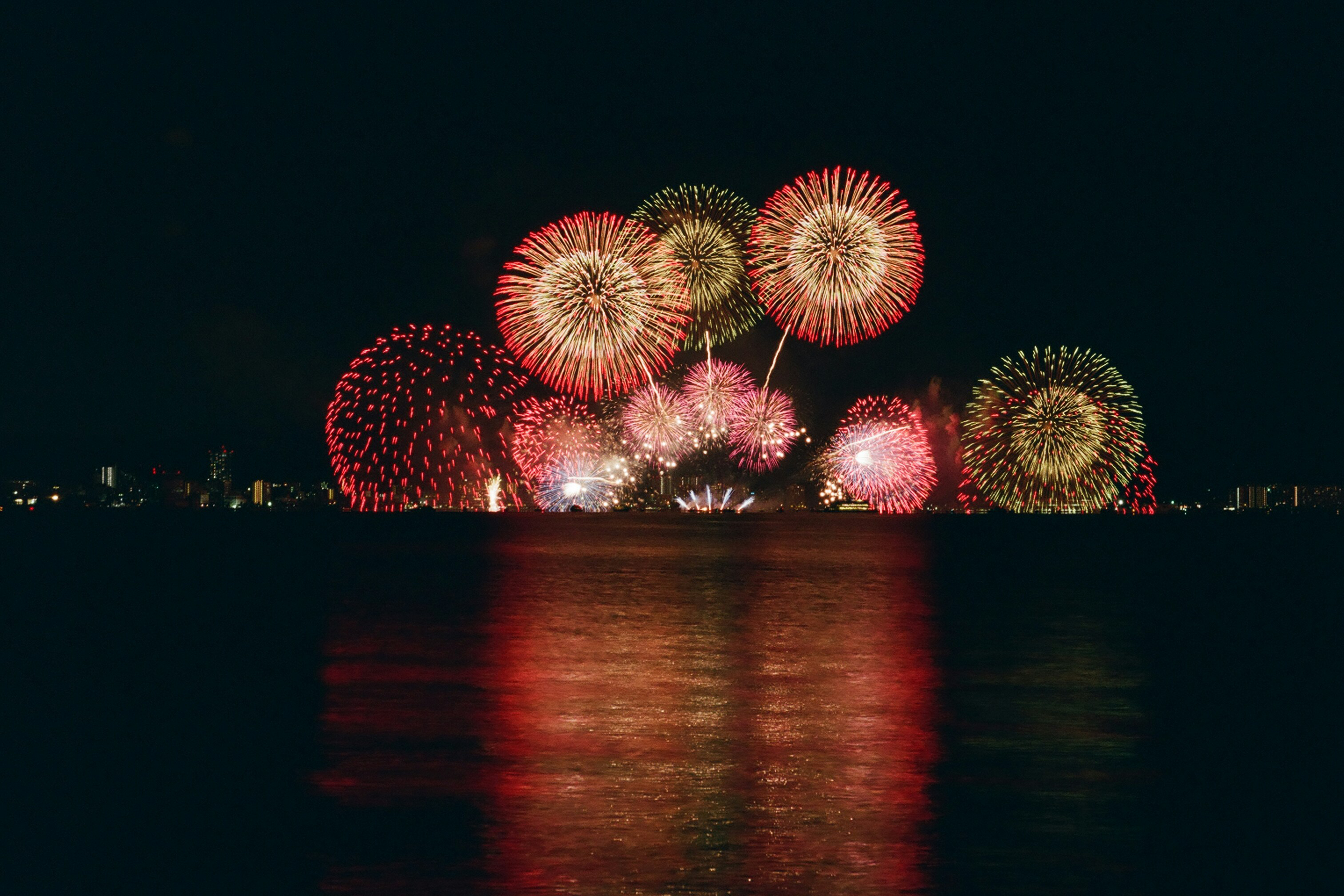
- Fireworks photography: Capture spectacular fireworks without risking camera shake from manual triggering.
|
Setting Example |
Recommended Equipment besides the Remote Release |
Recommended Settings to Start With |
|
Find a location with a clear view of the fireworks, ideally with interesting elements in the foreground or background for added depth. |
A tripod is essential to keep the camera stable during long exposures. A remote release prevents camera shake when triggering. A wide-angle or zoom lens provides flexibility in composition. |
ISO 100, aperture between f/8 and f/16, and start with an exposure time of about 5 seconds. Adjust the settings according to the brightness and speed of the fireworks. |
- Creative Light Painting: Use darkness and move light sources to create unique works of art.

@ ZOLAQ – Olaf Schieche
|
Setting Example |
Recommended Equipment besides the Remote Release |
Recommended Settings to Start With |
|
Find a completely dark environment. Use colored LEDs, flashlights, or light sticks to draw patterns or text in the air. |
In addition to a tripod, various light sources such as LED lights, light sticks, or even fireworks can create different effects. Color filters for lights can further enhance the visual impact. |
Use a long exposure time (20 seconds to several minutes), a low ISO value to minimize noise, and an aperture that allows enough light for a good exposure. |
Conclusion
A remote release is a small but powerful tool in photography that helps you realize your creative visions without technical limitations. The possibilities are as limitless as your creativity.
For everyone who wants to take their photography to the next level, we recommend taking a look at our Wireless Remote Release in our shop. It not only offers the advantages mentioned above but also the freedom and flexibility you need for exceptional photography. Discover new perspectives and expand your photographic skills with this indispensable tool.

Share:
Trail Cameras: Everything You Need to Know!
Stephan Wiesner: He uses our LUX series for this!