

There comes a moment when every vlogger and content creator faces the same question: Which lens should I take with me when traveling? Most opt for a 35mm or 50mm – proven focal lengths, safe choices. But there’s one lens that is unfairly underestimated: the 24mm. And honestly? This is your chance to stand out from the crowd.
The 24mm has a reputation that doesn’t do it justice. Many vloggers say it’s "too wide," too much wide-angle, too distorted. And that's exactly where they're wrong. Because for video and content creation, "too wide" is often exactly what you need. With a field of view of about 83 degrees, the 24mm doesn't just show you – it shows your whole story. The street you're walking on. The cafe you're sitting in. The mountains behind you. All in one shot that feels natural, without looking like a fisheye distortion.
The field of view that changes everything
When you shoot a video with your camera, something interesting happens: With a 24mm lens, you don't just show the person in front of the lens – you show the context. This is a completely different way of storytelling. While a 50mm isolates you and minimizes everything around you, with the 24mm, you are part of your environment. That feels authentic. That feels intimate.
Think of the best travel blogs you've ever seen. The creator walks through a Moroccan medina, and you see not only their face but also the arches above them, the merchants next to them, the depth of the alley. That's the magic of the 24mm: It tells the whole story in one shot, not with three different focal lengths.

Conscious composition: Why the 24mm changes your style
With a 24mm, you need a different approach. The wide field of view challenges you – you have to actively search for the right vantage point and compose more consciously. It's not enough to zoom or film from a distance. You really have to be part of the scene.
That's the big difference to longer focal lengths. With an 85mm, you can stay further away and still get close-up looking shots. With the 24mm, the field of view forces you to engage with your surroundings. You need a clear foreground, you need layers, you need the right angle. That sounds like more work – and yes, at first it is. But that's exactly what makes your videos better.
Spontaneous moments, quick cuts, genuine reactions – the 24mm captures everything because it forces you to be present. Not from a safe distance, but as an active part of the story. The wide aperture of F/1.8 gives you security. Even when it's dark (and it's often dark in hostels, cafes, and museums), you maintain sharpness and light sensitivity while composing.
As Matteo Di Gulio, a creator who works with it, says: "The Rollei 24mm delivers breathtaking sharpness from F/1.8, reliable autofocus, and impressive stray light control – even in difficult lighting conditions." This isn't just technical jargon. It means: You can focus on your video, not your camera.

The 24mm advantage for travel and adventure
The harsh reality of content creation is simple: The lighter your equipment, the more likely you are to take it with you. And the more likely you are to take it with you, the better your videos will be.
A large zoom lens is versatile – sure. But it rarely comes alone. With longer focal lengths or heavy equipment, you often need additional stabilization (a gimbal, for example) or filters for more control. That's all useful – but it also means: More to carry, more to pack, more to manage.
With a compact 24mm F/1.8, your setup is different. It's deliberately minimal. It's light. It fits everywhere. This doesn't mean other tools aren't valuable – it just means you don't necessarily need more to start with.
Jonas Schröder summarizes it this way: "Thanks to its light weight and small size, the Rollei lens is the perfect travel companion. Despite its low weight, quality and comfort are not compromised." That's the sweet spot. Not the most expensive setup. Not the most complex. But the one you'll actually take with you everywhere.
And that also means: You need less. A compact camera, a 24mm F/1.8, and you're ready for almost any content you want to tell. That's your basic setup. Everything else is a nice-to-have.

From the street to the cafe, from the cafe to the vlog: The versatility of the 24mm
The 24mm isn't perfect for everything. A 24mm is not a macro lens, and it's not a telezoom. But for content creation? It's a small marvel.
Are you doing a walking shot through an old town? The 24mm is your friend. The deep depth of field at F/1.8 means you don't have to constantly refocus as you walk. The wide field of view shows the environment you're moving through. Your audience sees where you are, not just your face.
Are you doing a talking head in a small hostel room? With a 50mm, you have to stand far away. With the 24mm, you're close enough for your audience to see you, but wide enough for them to see the room too. That's the balance that makes videos interesting.
Are you shooting B-roll in a museum or restaurant? The 24mm fits everywhere. It's not too tight, not too wide. It shows details and context at the same time. The dish on the table, the paintings on the wall, yourself in the scene – all in one shot.
This is also the point Philipp Kirchhof makes: "The Rollei VAF 24mm AF F/1.8 impresses with ideal weight, sharp, reliable focus, and its wide aperture provides security in the subject even in the darkest corners of the street." In other words: It's reliable. The autofocus works. The sharpness is spot on. You can focus on what really matters – your story.

The 24mm for social media content
What does the 24mm have to do with TikTok, Instagram Reels, or YouTube Shorts? Everything. These formats are fast. Quick cuts, quick transitions, quick stories. The 24mm delivers exactly the material you need for these formats.
With a 24mm, you get multiple perspectives from one position. You don't have to constantly re-compose, re-focus, re-think. You do one walking shot and have ten different frames to cut from. That's the efficiency you need in modern content creation.
And here's the point about "spatial storytelling": The 24mm doesn't just show what you're doing, but also where you're doing it. The viewer remembers not just your face, but the story, the place, the mood. That's what people watch videos for – not for perfect technology, but for real moments.
Composition: foreground, midground, background
With a 24mm, you have to compose more consciously. The wide field of view provides a lot of information. If that information is chaotic, your video will look chaotic. If it's organized, your video will look professional – even if you're filming with an inexpensive camera.
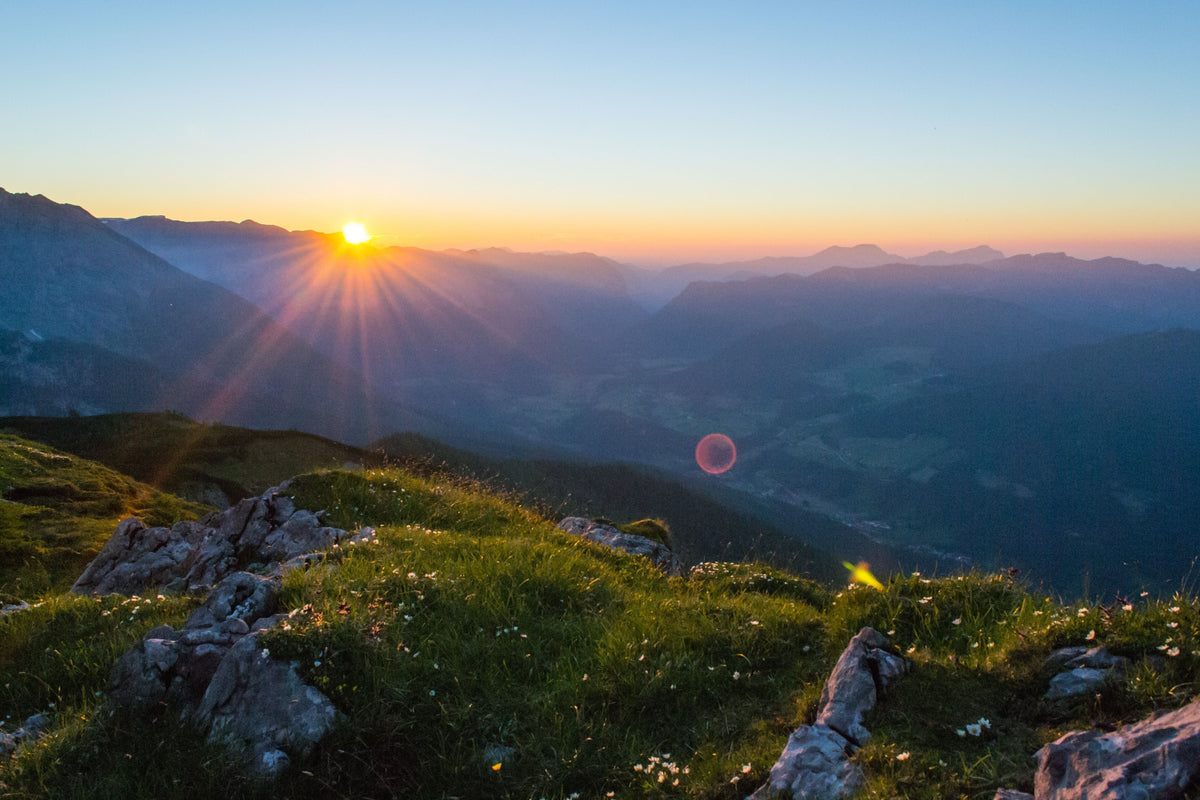
The secret? Think in layers. Foreground, midground, background. With a 24mm, you can show all three. A blade of grass in the foreground, you in the midground, mountains in the background – all sharp, all interesting. That's depth. That's dimension. That's what professional content creators do.
This also works in urban environments. A paving stone in the foreground (leading line), you in the middle, buildings behind. Or in cafes: A coffee in the foreground (blurred, but recognizable), your face in the middle, the people and space behind.
This way of composing takes time at first. You have to change your position, kneel down, go high, experiment. But when it clicks, it clicks. Suddenly your videos look different. They have dimension. They have a story.
The best decision is one you make
In the end, it's not about the most expensive zoom lens. The story you want to tell is waiting for you to get close, to have the courage to show where you are, and to focus on what really matters: your story.
The Rollei AF 24mm F/1.8 could be exactly the lens that takes your content to the next level. Underestimated, versatile, lightweight – and ready for your next adventure.

Share:
Stephan Wiesner out and about with Rollei prime lenses for a practical test
Das richtige Objektiv: So holst du die beste Leistung raus