

Stephan Wiesner is a professional photographer and therefore knows the daily routine behind the camera well enough to know when a lens really works and when it doesn't. In a test, he took our two new Rollei prime lenses with him – the 35mm F/1.8 and the 24mm F/1.8 – and tried them out in real-world situations: at the riding stable, in the village pub, and in the heathland.
In this post, we summarize what he learned – including a few tips for wide-angle photography that emerged.
Rollei 35mm F/1.8 – Made for Documentary Photography
Who is 35mm interesting for?
35mm has been a classic reporter focal length for decades, and for good reason. You're close enough to show a person – but far enough to include some of the surroundings. Not a tight headshot, but also not a group photo from a great distance. Stephan sums it up: "Woman riding a horse, fisherman fishing, craftsman at work – that is the domain of 35mm."
Practice at the riding stable: Light and composition
During the shoot at the riding stable, two things emerged that Stephan repeatedly emphasizes in wide-angle shots of people and animals. First: The main subject should be away from the edge of the picture. What is at the edge gets distorted – with a horse's head that can look funny, but with portraits, it is rarely advantageous. Second, the light determines the viewpoint: In the stable, there was only one usable light source. Anyone who photographs against it gets dark, flat images. In cramped conditions, it is worth clarifying this point early on.

For the indoor riding shots, Stephan used a slightly longer shutter speed and panning technique to show movement – 35mm is well suited for this. The autofocus on the Sony A7 V caused no problems, even with continuous shooting.

Low-Light and Autofocus
Evenings in a pub with little light, people moving around – this is where aperture speed makes a difference. F/1.8 gives more leeway here than a zoom with F/2.8 or F/4. Stephan also photographed through a glass pane in the dark, including face detection. This worked without any problems, even as a third-party lens on the Sony A7 V.

Image Quality
The sharpness is good even at open aperture, both in the center and at the edges – if you stop down slightly, it improves even further. The vignetting at F/1.8 is clearly visible but can be corrected or intentionally left as a compositional element, which Stephan often does with portraits. The bokeh is pleasant for a 35mm focal length, even if the background is not as strongly blurred as with longer focal lengths.
Flexibility through Cropping
On a high-resolution camera like the Sony A7 V, the image can later be easily cropped to an effective 40 to 50 mm and still have enough pixels for a clean output. Conversely – i.e., becoming wider with a longer lens – is only possible via panorama, which is significantly more complex.
Rollei 24 mm F/1.8 – Wide-angle with Room to Maneuver
When do you opt for 24mm?
24mm offers a bit more angle of view than 35mm and is particularly suitable when the surroundings are meant to take up a large part of the image. The cutter with the North Sea in the background. The craftsman, where the tools and the space tell as much as the person themselves. Even at night in the city or with architecture, F/1.8 is noticeably advantageous compared to a slower zoom.
People in the Landscape
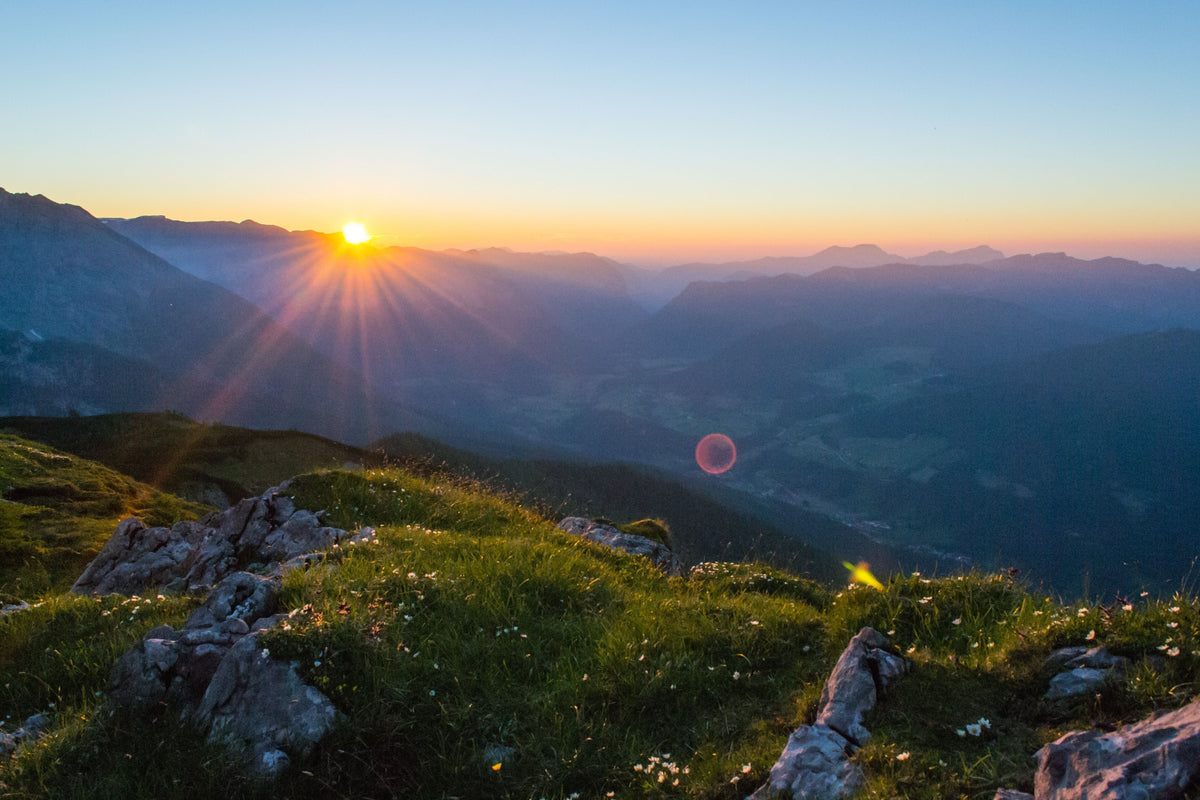
Stephan demonstrates the 24mm for shots in the heathland – video with gimbal, reportage style. The result is a look that conveys closeness and expansiveness simultaneously. At F/1.8, the background becomes slightly blurred but remains recognizable. A few steps back, and it comes more into the foreground. This interplay between people and surroundings is hardly achievable with longer focal lengths.
Distortion as a stylistic device
At 24mm, distortion is a topic that should be understood. Placing the main subject at the edge of the image will distort it. This can be a problem – or it can be used intentionally. Large hands, a powerful tool, a broad posture: all of this can be emphasized specifically with 24mm. Stephan recommends generally keeping people and animals away from the edge, unless the distortion is part of the image's message.

Sharpness at 60 Megapixels
Stephan tested the Rollei lens on the Sony A7R V. In the center of the image, the sharpness at F/1.8 is good. At the edges, at open aperture – which is more noticeable with 60 megapixels than with lower-resolution cameras – there is slightly less sharpness, which improves from F/2.8 and is very good from F/5.6. The vignetting at open aperture is present and can be adjusted in post-processing or used as a stylistic device, similar to distortion.
On the Sony A7R V and A7 V, the autofocus worked flawlessly for all shots – no sports use, but everything Stephan did with it in everyday life worked without any issues.
35mm or 24mm?
That depends on what you want to do with it. The 35mm is the more versatile entry point – it's more forgiving when composing and can be used in a wider range of situations. The 24mm has a wider angle of view and thus more creative possibilities, but it also requires more awareness when dealing with distortion. If you have one of the two and want to complement it, the combination covers a good range.
Conclusion
Stephan has summarized it for you: Both lenses have no real weaknesses. They deliver solid image quality at F/1.8, are well-made, and are significantly cheaper than comparable manufacturer lenses.
Whether for reportage, travel, architecture, or something creative: Both focal lengths cover a lot. And Stephan brings it back to his usual denominator in the end: "In the end, it's more the index finger that's the problem than the lens."

Share:
Viltrox AF 16mm F/1.8 in a Practical Test with Stephan Wiesner
24mm for Content Creators: The Lens You're Underestimating