
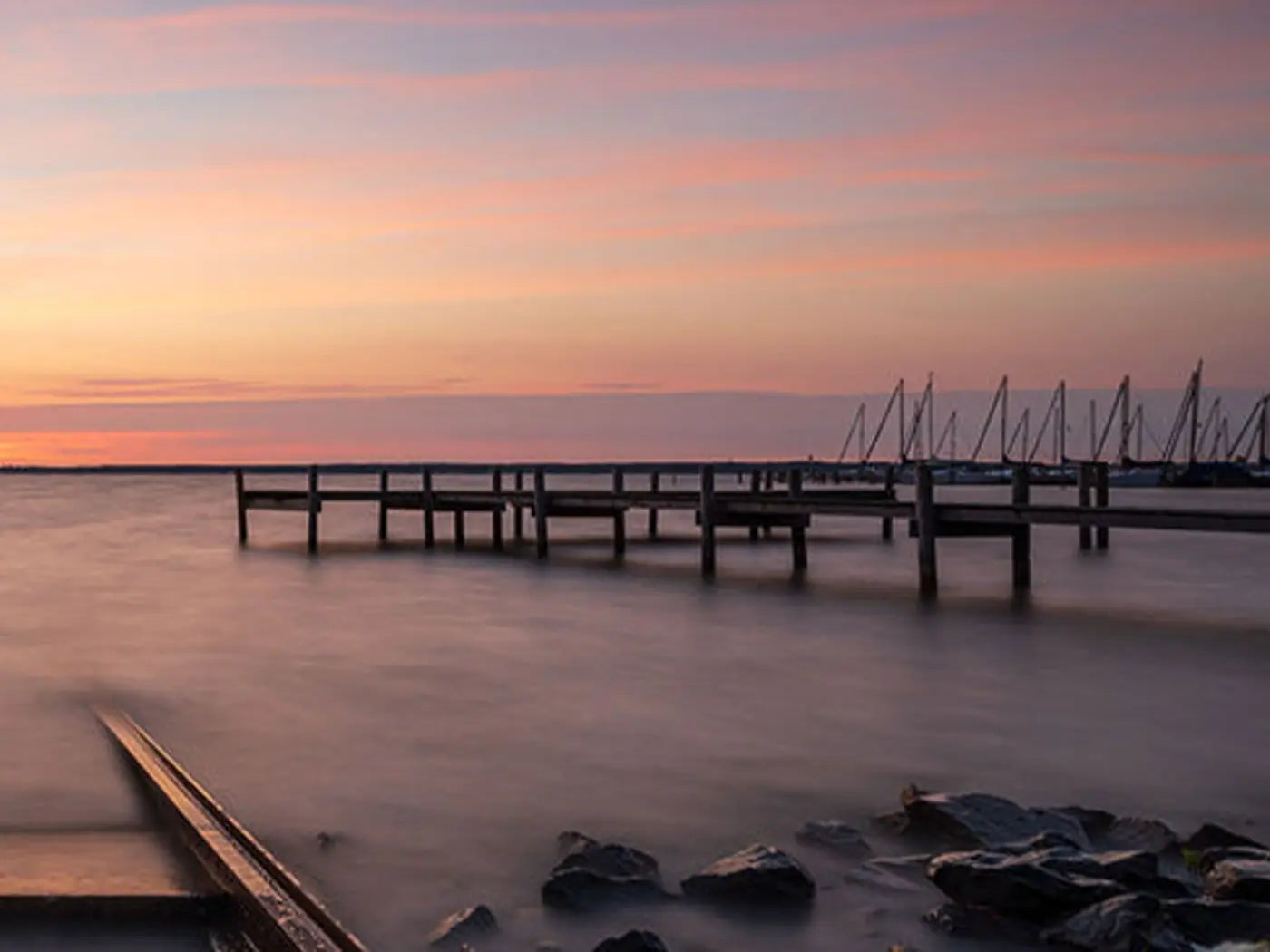
Photographer Stephan Wiesner specializes in landscape photography and is known for his photos and tutorial videos on Youtube, Instagram and his blog. Now he has tested our Rollei F:X Pro (ND filters and graduated neutral density filters) and published an informative video about them on Youtube.
It offers some good tips and tricks for using the filters and for landscape photography. Wiesner demonstrates various test situations.
For example, how he takes long exposures with his camera at the harbor in Hamburg and Lake Steinhuder Meer in Lower Saxony.
In the video, he explains, among other things, that he often combines rectangular filters, such as his ND8 and ND1000 in the filter holder at Hamburg Harbor.
ND Filters for longer exposure times
ND stands for neutral density filter. They are also called neutral density filters and are used when the light hitting the camera sensor needs to be reduced. This allows the exposure time – depending on the strength of the neutral density filter – to be extended by several f-stops.

By darkening the ND filter, you are able to take magical-looking photos with long exposure times and impressive effects even in sunshine.
Moving elements of the image composition blur as a result, which, for example, makes the water look silky when photographing a river – but larger stones in the river are sharply defined because they do not move.

Gollinger Wassermühle with the ND1000 Neutral Density Filter
Graduated neutral density filters, including hard transitions
However, it is not just a neutral density filter test, because the F:X Pro series also includes graduated neutral density filters.
Compared to ND filters, graduated filters, which are abbreviated to GND filters (graduated neutral density), offer a transition from tint to transparency. They are used (unlike normal ND filters) for subjects where the brightness conditions within the subject are different and therefore need to be adjusted differently for a good landscape picture.
There are different types of graduated filters. For example, the Hard GND with a hard gradient, as the name suggests. It is particularly suitable for subjects that have a clear horizon line.
However, there are also filters with a soft gradient and those where the tint runs from the center to one side (Reverse) or from the center to both sides (Center).

ND filters and graduated neutral density filters must be firmly seated in the holder
Those who know Wiesner know that he has a large and loyal fan base who comment gratefully and kindly under his videos.
This may be because Wiesner explains the subject of his videos in an understandable way and sprinkles in a joke or two. At the Elbphilharmonie, for example, when he repeatedly starts to speak, and the noise of road traffic continuously interrupts him from the background.

Hamburg Elbphilharmonie with the ND8 Neutral Density Filter + ND1000 Neutral Density Filter
In his video, Wiesner also explains that ND filters and graduated neutral density filters must be particularly firmly seated in the holder, which in turn means that you have to use a little force to remove them from the holder. As a result, fingerprints can sometimes end up on the glass, which is why he presents a little trick: Wiesner always has a cleaning cloth up his sleeve when he's out in the countryside taking photos. This way, he can quickly clean the glass that sits in the filter holder system in front of the lens if necessary and then make the cloth disappear back into his sleeve.
He reports that cleaning with other manufacturers has not always worked so easily. Wiesner explains that he has had to throw away products because they were so dirty that they could no longer be saved.
With the new F:X Pro, this problem is a thing of the past. Thanks to the particularly fine coating, fingerprints are no longer a problem because they can be removed with ease. The new coating also results in even fewer light reflections.

Under the heading of stability, he explains that glass filters can be a bit problematic for landscape photographers. "If you're out and about somewhere and your fingers are stiff in the morning, things sometimes fall down," says Wiesner.
Immediately at this moment, he demonstrates the high quality of the F:X Pro filters, which are made of Gorilla Glass and are extremely resistant. While the camera shows him centered in the image, Wiesner simply throws a filter out of the image to the right. After showing the intact Rollei filter, he dryly explains that he probably needs to vacuum again.

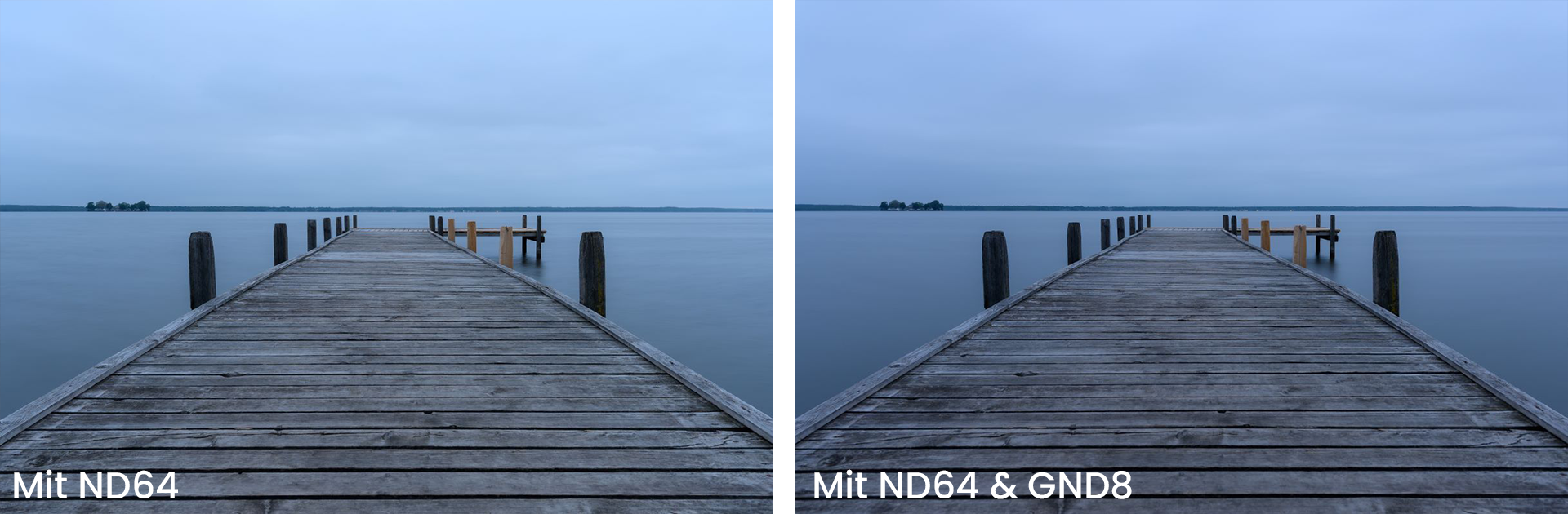
Steinhuder Meer with the ND64 Neutral Density Filter + GND8 Graduated Neutral Density Filter
In the comments under his YouTube video, his fans celebrate this moment. One humorously writes: "I was startled when the filter suddenly flew across the room... I bet Rollei's sales department just had a heart attack. Brave of you, Stephan." (Note from us: We also laughed at this moment in the video.)
Wiesner himself says:
"Please don't try this at home, because this is laminate now, but if you're photographing by a stream, the filter might just be gone. That's probably more of a problem than it breaking."

Pier at Steinhuder Meer with the ND1000 Neutral Density Filter + GND8 Graduated Neutral Density Filter
Conclusion: Wiesner recommends the filters: "I'm faster with them than with a round filter, because I can just leave the attachment on," says Wiesner. "Take the attachment out of the bag and click it on - done." By this, he means the Easy-Lock system of the rectangular filter holder, which allows the filter holder to be separated from the base ring, which sits on the lens, with just one hand movement.
Another part of the conclusion: Wiesner finds the associated bag with the filters very clear and says that the practical thing about it is that you can simply spread out the bag and prepare the camera filters so that they are at hand when you need them.
Share:
Portraits like Martin Schoeller's: what makes them so special
Black and White Photography in Venice: A Report by Sascha Hüttenhain