
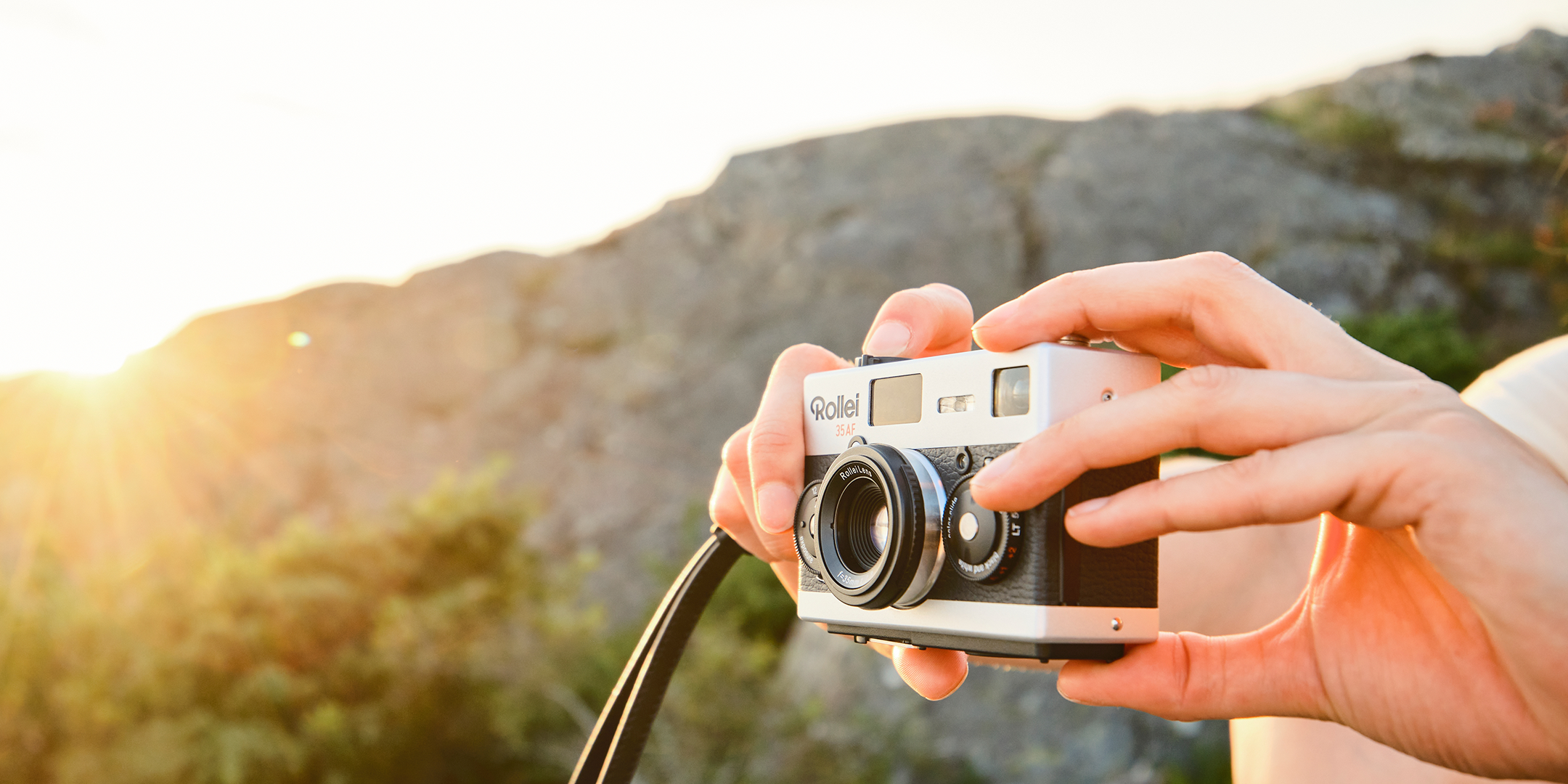
Analog photography has a charm of its own. The delicate grain, the special color rendition, and the incomparable depth of the images immerse us in a world that digital photography often cannot reach. But what makes these images so special? A decisive factor is exposure – a central element that plays a significant role in analog photography. In this post, we take a look at the basics of exposure and shed light on why it is so crucial in analog photography.
What is exposure and why is it so important?
Exposure refers to the amount of light that hits the film while a photo is being taken. It is the interplay of three essential elements: aperture, shutter speed, and film sensitivity (ISO). In digital photography, a poorly exposed image can often be salvaged with image editing software, but in analog photography, there is no second chance. An overexposed or underexposed image generally remains as it was captured. That's why it's important to understand and master the art of exposure.

The three pillars of exposure
- Aperture: The aperture determines the amount of light that passes through the lens onto the film. It is regulated by the aperture opening, which can be made smaller or larger. A wide-open aperture (small f-number, e.g., f/1.8) lets in a lot of light and creates a shallow depth of field, meaning only a small part of the image is sharp. A closed aperture (large f-number, e.g., f/16) lets in less light and provides a greater depth of field, making more areas of the image sharp.

- Shutter Speed: Shutter speed indicates how long the camera's shutter remains open, allowing light to hit the film. A fast shutter speed (e.g., 1/500 second) "freezes" fast movements, while a slower shutter speed (e.g., 1/4 second or longer) can blur movements and allows more light to reach the film. In analog photography, shutter speed must be chosen carefully, as it has a direct impact on image sharpness and exposure.

- Film Sensitivity (ISO): The ISO number indicates the film's sensitivity to light. A film with a low ISO number (e.g., ISO 100) is less sensitive to light and is suitable for bright lighting conditions, while a film with a high ISO number (e.g., ISO 1600) is more light-sensitive and works better in low light. Unlike digital photography, where ISO values can be flexibly adjusted, in analog photography, you must choose an ISO sensitivity before loading the film.

Why is exposure so crucial in analog photography?
In analog photography, you work with a physical medium – film – which, unlike digital sensors, cannot be adjusted retrospectively. Any error in exposure directly affects the final result. A wrongly exposed photo can lead to the loss of important details: an overexposed image appears flat and without contrast, while an underexposed image can be dark and lacking in detail.
Analog photography demands a deep understanding of lighting conditions and the ability to accurately assess them at the moment of capture. There is no preview on a display and no way to adjust the exposure afterward. This requires careful study of lighting conditions and an intuitive understanding of camera settings.
Exposure as a creative decision
However, correct exposure is not only a technical necessity but also an artistic decision. The way light hits the film influences the mood and atmosphere of a photo. By consciously playing with aperture and shutter speed, photographers can create unique effects and express their own creative vision. For example, a slower shutter speed can introduce motion into the image, while a wide-open aperture creates beautiful bokeh and directs the viewer's eye to the main subject.

Share:
Impressive fashion shots? Here's what you need to know!
Collapsible Reflectors - Why You Need Them