
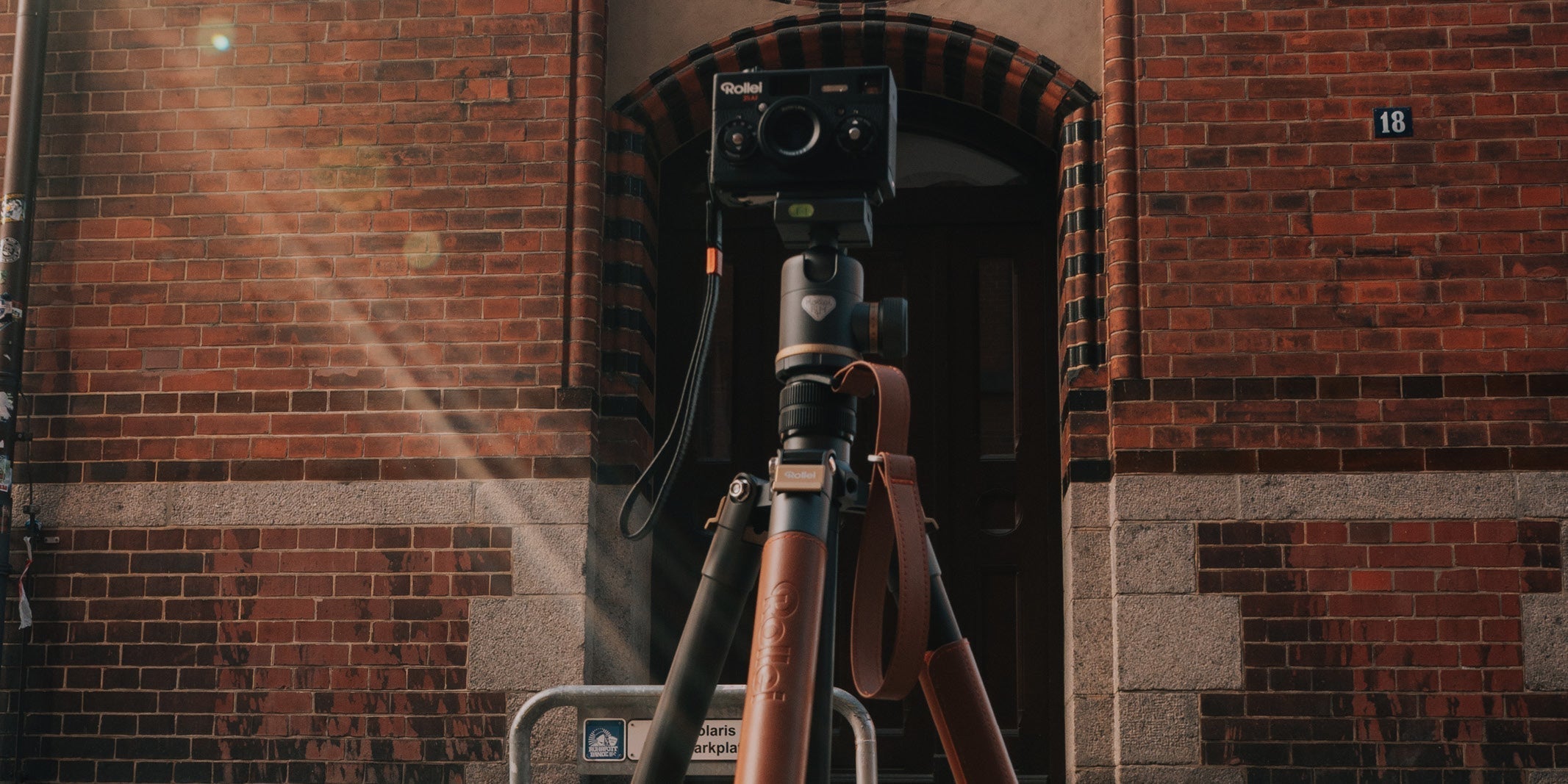
Photography turns 200 this year. Two centuries in which people have tried to capture moments – to capture light, preserve memories, and tell stories. It's an astonishing journey. And while the world of photography has radically changed, the essence has remained the same: The desire to capture the fleeting.
But here's something special: While photography celebrates its 200th anniversary, the Rollei brand has been part of this journey for over 100 years.

Capturing the Light: The Beginnings of Photography (1820-1920)
1826: Joseph Nicéphore Niépce achieves the impossible – he captures light. After several hours of exposure, a blurry image emerges from his window. It's barely discernible, but it's real. The beginning of everything.
"Photography" literally means "painting with light." A radical new way to document the world. Not by an artist's hand, but by light itself.
Louis Daguerre follows with the daguerreotype – razor-sharp, detailed images. People have their pictures taken, not just as paintings, but as true representations. It's a revolution. But each image is unique, not reproducible.
Then comes William Henry Fox Talbot with the calotype and the negative-positive process. Suddenly, you can print an image a hundred times. Photography becomes reproducible.
The great democratization comes with George Eastman and Kodak. His motto is brilliant: "You press the button, we do the rest." Cameras become smaller, more portable, more affordable. Photography leaves the studios and enters the streets, homes, and pockets of ordinary people.
And in 1920, at precisely this moment – Paul Franke and Reinhold Heidecke found the company Franke & Heidecke in Braunschweig – the origin of the Rollei brand. They recognized what photographers truly needed.
An Icon is Born: Our Golden Years (1920-1960)
In the 1920s and 30s, Rollei was not just another camera manufacturer. With the Heidoscop and later the legendary Rolleiflex, the brand quickly became an institution. The Rolleiflex was revolutionary: a twin-lens reflex camera, compact, precise, robust.
Photographers loved it. Reportage photographers, artists, documentarians – Rollei was the standard, they were not just tools. They were a statement: quality over quantity.
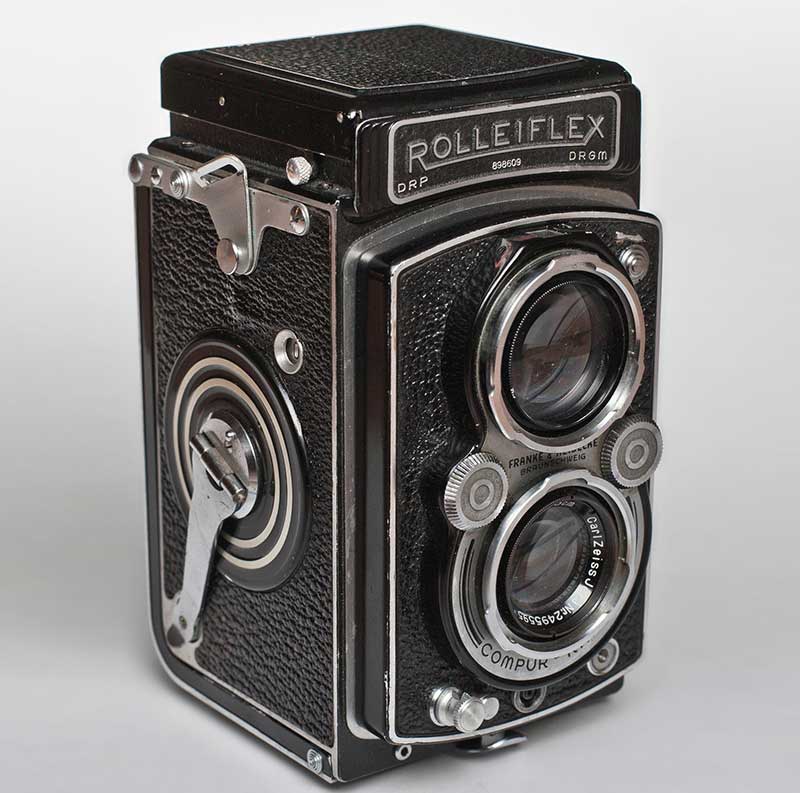
This period was also the golden age of photojournalism. Henri Cartier-Bresson and others defined "the decisive moment" – often with Rollei cameras in hand.
The Awakening: Modernity Meets Tradition (1961-1980)
The 1960s and 70s were explosive. 35mm cameras and color film opened up entirely new creative possibilities. Street photography became a genre. Fashion photography flourished. The camera became a tool for artists and visionaries.
With the Rollei 35 and the groundbreaking Rolleiflex SL66, Rollei combined traditional quality with modern technology. The SL66 was compact, yet fully featured – intelligently designed rather than technically overloaded. That was the secret: innovation that didn't abandon craftsmanship but refined it.
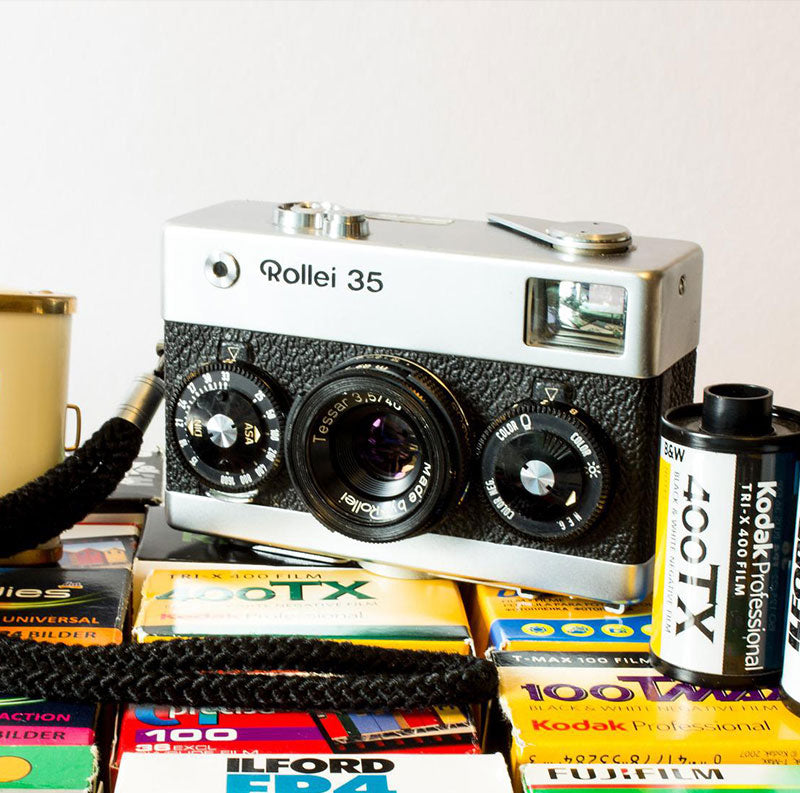
Photographers like Helmut Newton and Peter Lindbergh defined new genres during this time.
The Upheaval: Analog and Digital (1980-2010)
The digital revolution came – slowly at first, then everywhere. What did that mean for photography? With cameras like the Rolleiflex SL2000 F and the Rolleiflex 6006, the aim was to combine traditional quality with modern technology. Autofocus, digital metering, more modern materials. In the 1990s came the move to digital photography.
But while some switched to digital cameras, others noticed something: Something important was lost. The process. The craft. The conscious design. Analog was not forgotten – it became a conscious choice.
Back to the Roots: The Longing for Authenticity (2010-Today)
While smartphone photography took over the world, a longing for the opposite grew simultaneously: for deceleration, for authenticity, for true craftsmanship.
Analog photography experienced a revival. Not just nostalgia, but genuine interest. The grain, the light leaks, the imperfections – they give images character. They tell stories differently. Photographers consciously chose which camera, which medium, which aesthetic.
The C6i Heritage: Where History and Future Meet
The C6i Heritage Carbon tripod is more than a tripod. The design consciously incorporates retro elements – warm colors, classic shapes. It evokes a time when photography was a conscious craft. Photographers knew their equipment and loved it.
But the technology behind it is modern: carbon construction. Precision ball head with 360° panorama function. Monopod function, divisible center column, smartphone holder.
This is not nostalgia. This is: Heritage aesthetics meets modern functionality. Exactly what Rollei has always done. Innovation that didn't abandon craftsmanship but refined it. The C6i Heritage is for people who understand: The best equipment is not the one with the most features, but the one you rely on and love.

Photography is Timeless
200 years of photography show one thing: Some things don't change. The need to capture moments. The desire to tell stories. The fascination with light and shadow. The joy of creating something beautiful.
Rollei has been on this journey for over 100 years. Through film and digital, through cameras and now through accessories. The essence remains: enabling photographers to realize their visions. Not with the most features, but with the right tools.
Photography turns 200. Rollei turns over 100. And the best camera is still the one you have with you – along with the right tools to truly use it.
Share:
Das richtige Objektiv: So holst du die beste Leistung raus
Was ein gutes Objektiv heute können muss