
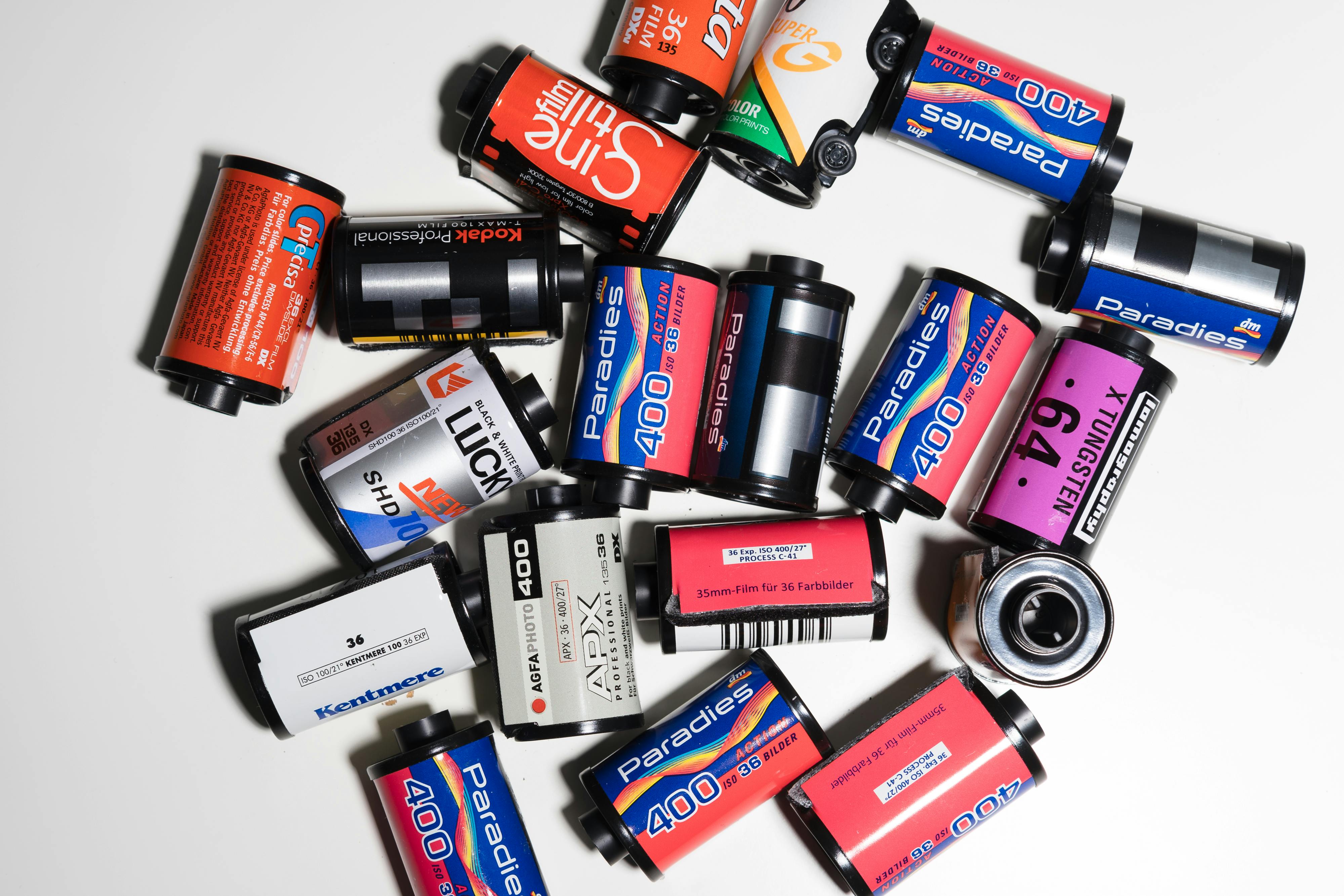
Photography has evolved drastically in recent decades, but the fascination with analog film remains unbroken. Many photographers appreciate the unique aesthetic and artistic possibilities that analog films offer. In this blog post, we will introduce you to the world of analog films and explain the various distinctions, formats, and types. We will also describe the typical characteristics and optimal applications for these films in analog photography.
Distinctions in analog films
Analog films are primarily distinguished by film formats and film types. These two categories determine the film's characteristics and its ideal applications.
Film Formats
Film Formats |
Characteristics |
Typical Applications |
|
35mm Film (35 mm) |
35mm film is the most common film format, offering a good balance between image quality, cost, and handling. It has high resolution and is versatile. |
Ideal for everyday photography, travel photography, and spontaneous shots. |
|
Medium Format Film (120/220) |
Medium format films have larger negatives than 35mm films, resulting in higher image quality, better detail, and finer tonal gradations. Various sizes are available, such as 6x4.5cm, 6x6cm, 6x7cm, and 6x9cm. |
Perfect for portrait photography, landscape photography, and fashion photography. |
|
Large Format Film (Sheet Film) |
Large format films are available in individual sheets, typically in sizes such as 4 x 5 inches, 5 x 7 inches, and 8 x 10 inches. They offer the highest image quality and detail, but are expensive and require specialized equipment. |
Ideal for architectural photography, art photography, and commercial photography where the highest level of detail is required. |
|
Instant Film |
Instant film develops immediately after exposure, offering instant results. Known through brands like Polaroid and Fujifilm Instax. |
Optimal for event photography, creative projects, and situations where immediate prints are desired. |
Film Types
Film Types |
Characteristics |
Typical Applications |
|
Color Negative Film |
Color negative films have a wide exposure latitude and can capture a broad range of colors and brightness levels. They offer vibrant color saturation, fine grain, and high resolution. |
Suitable for portrait photography, landscape photography, and everyday photography. |
|
Black and White Film |
Black and white films reproduce colors in shades of gray from black to white, offering a timeless, artistic aesthetic. They are characterized by high resolution and grain, resulting in detailed and textured images. |
Perfect for artistic photography, documentary and reportage photography, and architectural photography. |
|
Slide Film (Reversal Film) |
Slide films produce positive images directly on the film, without the need for inversion. They have a lower exposure tolerance but offer exceptional color reproduction and sharpness. |
Ideal for professional photography, nature and landscape photography, and travel photography. |
 Example: Slide Film Example: Black and White Film
Example: Infrared Film
ISO Values in Analog Photography
The ISO value is essential for analog films as it indicates the film's light sensitivity. A low ISO value (e.g., ISO 100) means low sensitivity and is suitable for bright light conditions, while a high ISO value (e.g., ISO 800 or higher) means higher sensitivity and is suitable for darker light conditions.
Sensitivity: Refers to how quickly the film reacts to light. A low-sensitivity film (low ISO value) requires more light to produce a correctly exposed image. A high-sensitivity film (high ISO value) requires less light.
Grain: Describes the visible pattern on the developed film, which is created by the light-sensitive silver halide crystals. Low-sensitivity films (low ISO values) have smaller crystals and produce finer grain, resulting in smoother and more detailed image quality. High-sensitivity films (high ISO values) have larger crystals and produce coarser grain, resulting in a grainier and less detailed image.
ISO Value |
Characteristics |
Typical Applications |
|
ISO 25 |
Very low sensitivity, extremely fine grain, highest image quality. |
Ideal for very bright light conditions, such as sunny days and outdoor photography with long exposure times. |
|
ISO 100 |
Low sensitivity, fine grain, high image quality. |
Ideal for bright light conditions, such as sunny days and studio shots. |
|
ISO 200 |
Medium sensitivity, fine grain, good image quality. |
Suitable for slightly changing light conditions, such as partly cloudy days and indoor shots with sufficient light. |
|
ISO 400 |
Medium sensitivity, versatile, good balance between image quality and flexibility. |
Suitable for changing light conditions, such as cloudy days and indoor shots. |
|
ISO 640 |
Higher sensitivity, slightly coarser grain, good image quality in poor light conditions. |
Perfect for twilight, indoor shots without flash, and fast movements in low light. |
|
ISO 800 and higher |
High sensitivity, coarser grain, better suited for low light conditions. |
Perfect for night photography, indoor shots without flash, and fast movements. |
What does a negative image look like?
A negative image is the resulting image that appears on a film after exposure and development. It shows the brightness and color information of the original subject in reverse form:
- Colors: The colors are inverted; light areas appear dark, and dark areas appear light.
- Black and white negative: In black and white negatives, the grayscale tones are reversed; black becomes white and vice versa.

Conclusion
Choosing the right film essentially depends on the specific requirements and artistic goals of your photography. Color negative film offers versatility and broad color reproduction, black and white film captivates with its timeless aesthetic and high detail, slide film impresses with exceptional color depth and sharpness, infrared film creates surreal effects, and chromogenic black and white film combines the simplicity of color development with the aesthetic of black and white images. Additionally, the chosen film format significantly influences image quality and handling.
By understanding the unique properties, optimal applications, and the importance of ISO values in analog photography, you can make conscious decisions and expand your photographic skills. We wish you much success and joy experimenting with different film types and formats!



Share:
Backlighting Photography: The Art of Playing with Light and Shadow
Everything You Need to Know About HSS Photography: A Guide