
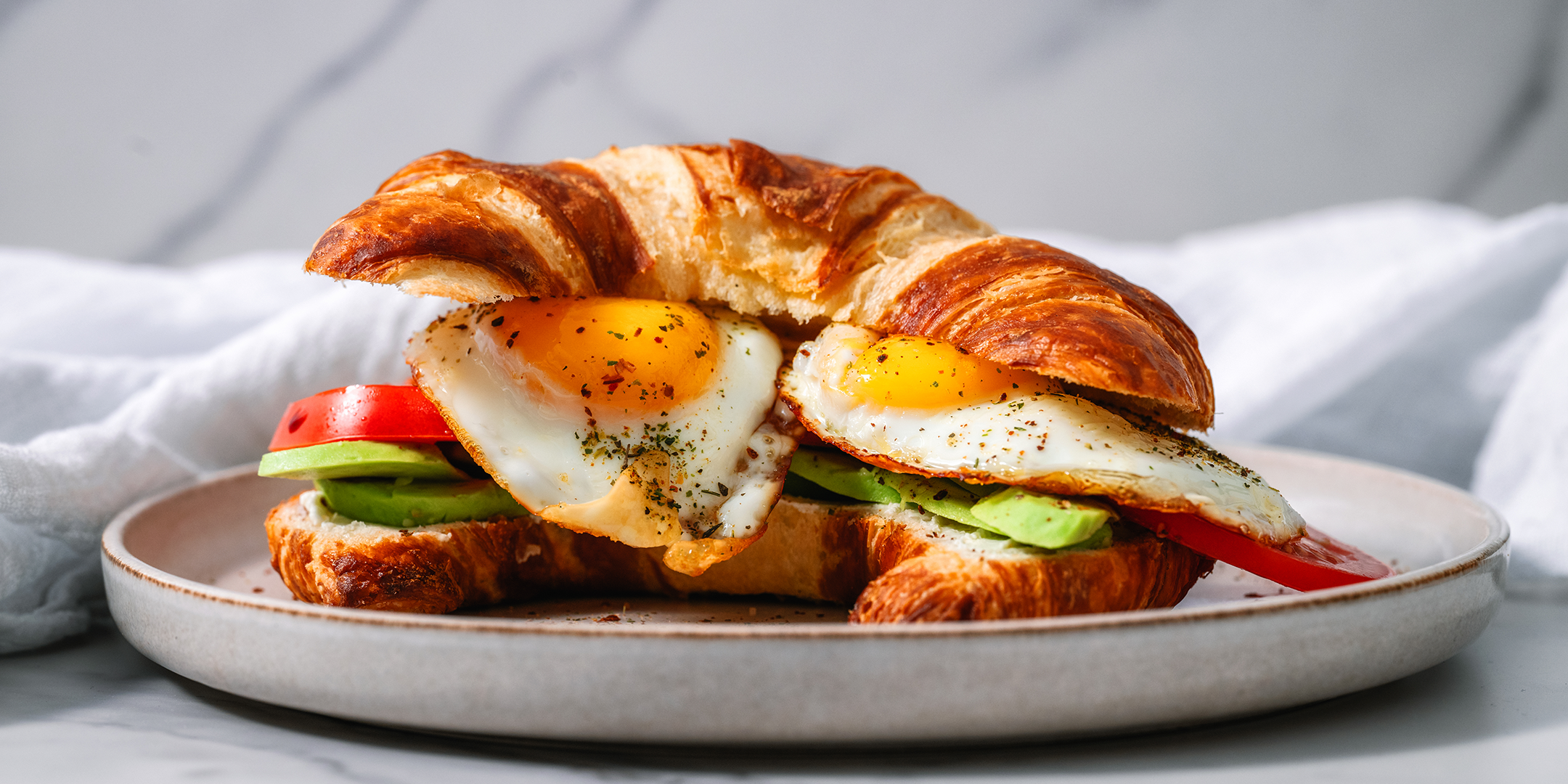
Proper lighting plays a crucial role in food photography, as light determines how appetizing and vibrant a dish appears. Especially LED continuous lights have established themselves as a game-changer in recent years, not only for professionals but also for beginners who are still familiarizing themselves with the intricacies of lighting techniques. But why exactly are these light sources so popular, and which challenges of food photography can be elegantly mastered with good continuous light?
From Wedding Photography to a Passion for Food
Kevin Huber, a photographer from the Göppingen area, knows these challenges firsthand. Originally at home in people photography, he discovered his passion for food photography and is now specifically working to specialize in this area. Good light is everything in food photography. Without the right lighting, images often lack depth and the food quickly looks flat or unappetizing. That's why Kevin relies on LED continuous lights to achieve perfect results even in challenging environments like restaurants or small studios.

Easy Handling: Why LED Continuous Lights Are Ideal for Beginners
Compared to flash light sources, LED continuous lights offer a huge advantage: You see the light before you press the shutter. Especially for beginners who haven't yet developed an trained eye for lighting moods, shadows, and reflections, this makes a huge difference. The set can be set up calmly and the light can be aligned precisely so that the subject is perfectly illuminated – without trial-and-error or constant checking of the camera display. "With LED continuous lights, I achieve the desired result much faster because I immediately see how the light affects the food," Kevin confirms.

Another advantage is flexibility. Modern LED continuous lights, like our LUX series are infinitely adjustable in color temperature and brightness. This allows you to create a cool, morning light or a warm, cozy evening atmosphere, depending on the desired mood – and that at any time, regardless of the time of day or weather conditions. "Especially for shoots in restaurants, where the light is often changeable or suboptimal, I can always ensure perfect conditions with my own continuous light," Kevin says.
Gentler on Food – Why Continuous Light Scores Here
An often overlooked aspect: LED continuous lights are significantly gentler on the sensitive protagonists of a food shoot. Unlike flash units or halogen lamps, which quickly generate a lot of heat, food stays fresh and appetizing longer under LED light. Especially for dishes with cream, glazes, or fresh herbs, this is a real plus.

More Creative Possibilities Through Additional Light Sources
In addition to the main light – often a softbox or a shoot-through umbrella on an LED continuous light, additional light sources can enhance the set, Kevin explains. A small LED light from the back, also known as a "kicker," adds fine highlights to glass or shiny surfaces and creates more depth in the image. Another light from the side, with harder characteristics, can create exciting shadows and thus emphasize the texture of a dish – be it the crispy crust of bread or the creamy sheen of a soup.
With targeted light sources, specific moods can also be staged: A warm, lateral glancing light conveys coziness and is perfect for autumnal or wintery food scenes, while a cooler top light emphasizes the freshness of a summer salad or a cocktail.
The Right Equipment for Food Photography – Recommendations from Kevin Huber
In addition to lighting, the choice of equipment also plays a major role in professional food shots. Kevin prefers to use a macro lens (e.g., 90 mm or 105 mm, f/2.8) for his shoots to create hero shots and detailed shots with beautiful bokeh. For flatlays and top shots, however, he recommends a flexible zoom lens, such as the 24–70 mm or 24–100 mm. These focal lengths make it possible to capture the entire table with various dishes.

Another indispensable tool is the tripod. "While I prefer to remain flexible in restaurant reportage, I almost always work with a tripod in the studio or for planned stagings," Kevin explains. This not only ensures shake-free shots but also provides the opportunity to precisely implement action shots such as pouring sauces or dusting a cake with powdered sugar. Kevin particularly recommends the Easy Traveler Video Tripod from Rollei, which is stable and offers finely adjustable perspectives thanks to the video handle.
Another highlight in Kevin's setup is our Duo Board, a double-sided printed photo background that can be used versatilely as a surface or background. "With the Duo Board, I can quickly create different moods without having to change the entire setup every time – that saves time and adds variety to my pictures."

Additionally, Kevin recommends a small set of props for beginners, often already found in the household: Cutting boards, baking sheets, napkins, cutlery, and glasses are excellent for getting started. Natural ingredients like chili peppers or herbs can also serve as visual highlights. If you want to delve deeper into food photography, you can gradually invest in professional backgrounds, reflectors, and artificial light.
No More Compromises – Perfect Light Anytime with LED Continuous Lights
Whether in the studio, at home, or directly in the restaurant – LED continuous lights are the preferred light source of many food photographers for good reason. They not only offer easy handling and creative flexibility but also create the perfect conditions to present food as fresh and delicious as possible.

For photographers like Kevin Huber, who is increasingly specializing in food photography, a compact and powerful continuous light has therefore become an indispensable tool – a game-changer that enables professional results even under difficult conditions. "I now take my LUX 100 Bi-Color to every shoot – it gives me the certainty that I always have the best light available," Kevin concludes. Anyone venturing into the fascinating world of food photography will find a reliable partner in LED continuous lights that helps to make every meal shine in the best light.
Discover more from Kevin Huber on Instagram!

Share:
Mastering the Art of Lighting in Photography: The Most Important Light Shapers and Their Effects
5 Creative Ways RGB LED Continuous Lights Elevate Your Content Creation