
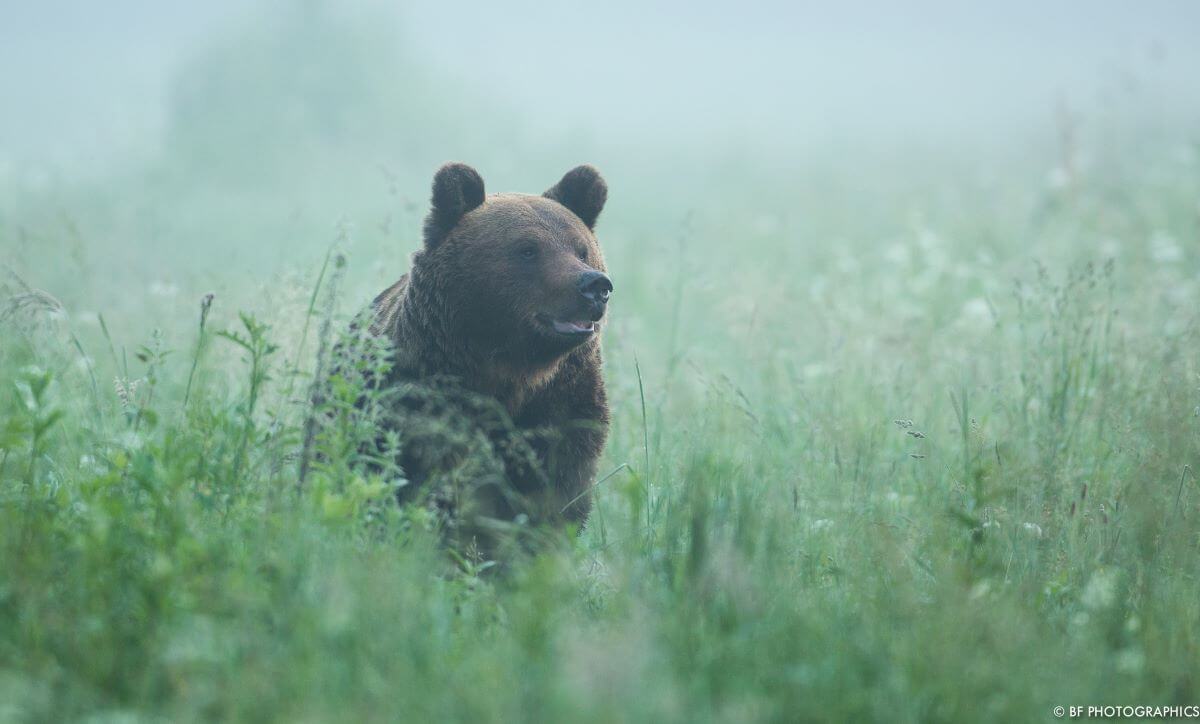
Benjamin Feldmann is passionate about animal photography. In this interview, he explains how he got into it, why he uses a gimbal head from Rollei, and what his most impressive moment in animal photography has been.
1. How did you get into nature/animal photography?
2. Is animal photography your main profession?
3. Why is a gimbal head so helpful, especially for animal photography?
4. What are the特点 of the Lion Rock Gimbal Head?
5. What has been the most impressive situation you've experienced on your photo excursions so far?
6. On average, how long does it take to get a good picture?
7. What equipment do you always carry on your excursions?
8. What about wolves? Are they easy or difficult to photograph?

1. How did you get into nature/animal photography?
I've always been very close to nature, from a young age. My father always took me and the dogs out into nature. We would build caves and treehouses. Or we'd play hide-and-seek with walkie-talkies. I've always found animals interesting.

When I was 20, I decided to buy a camera.
I simply wanted to capture what I saw. That's how I gradually got into animal photography.

After that, I traveled across Europe: to Poland, the Czech Republic, Spain, and Austria. Spain, especially, because I love birds. But also Scandinavia and Sweden.

Eventually, you learn where the animals are, but nature photography is also about the right moment and a few tricks.
For example, I use calls, basically whistles, that can make a certain sound that the animal finds interesting, making it pause briefly or turn in my direction. That's when the picture happens.

2. Is animal photography your main profession? Or do you do it more as a hobby?
I only do animal photography for myself, as a hobby. I've thought about doing it full-time, and I even considered a job at the forest office.
But then I would have had to retrain, and I didn't want to do that. My main profession is team leader in sales.
3. Why is a gimbal head so helpful, especially for animal photography?
Gimbal heads are very good for large telephoto zoom lenses, which are essential in animal photography. For example, I have a Canon 400mm f2.8.
That alone weighs six kilos, and then there's the camera on top. Many heads can't hold that securely.

With this head, you have very good control and great stability. Gimbal heads are mostly used for hide photography, I would say. The gimbal head is also heavier than normal ball heads. You either sit in the forest yourself, camouflage yourself, and then wait for wildlife. Or nowadays there are also hides where you sit and wait for the animal to photograph it.
I do hide photography, but I also walk a lot because sometimes I want to change locations for a picture.

4. What are the features of the Lion Rock Gimbal Head?
First impressions are very important to me. When I hold the gimbal head, I consider its perceived quality:
- Does the head have weight, indicating quality?
- Does it creak when you turn the locking knobs, or do everything move smoothly?
I've had the head for a little over a month and have really put it through its paces.

The quality is very high, which really impresses me.
Everything is easy and smooth to operate and adjust; the overall handling is excellent.
5. What has been the most impressive situation you've experienced on your photo excursions so far?
The encounter with the badger. Badgers are very difficult to photograph in the wild, but they make for a great subject.
They are extremely cautious and only emerge from their sett at dusk.

It took a good two weeks until I managed to get a badger on camera. The problem was that the sett wasn't particularly easy to photograph. First, I had to figure out its path towards the sett, and then I also had to find out what time it was active.
That was around just after five, then he went to sleep. I just made a short squeaking sound once, so he would turn around. And then he was gone.
6. On average, how long does it take to get a really good picture?
That varies greatly; the times can differ significantly. In animal photography, I generally have to first consider what kind of subject I want.

Sometimes, though, the photo happens immediately. By luck, for example, I recently discovered a barn owl in an old barn upstairs.

The shot of the black deer was also a lucky coincidence. I already had the camera mounted on the gimbal head and simply photographed the deer quickly through the window.

You simply can't plan for an animal.

7. What equipment do you always carry on your excursions?
Of course, I always have my camera, tripod, and tripod head with me, and usually a camouflage cover as well.

I also always carry calls, so basically whistles for foxes and badgers or even deer. Memory cards, of course. I don't always have the camera backpack with me. Because if I'm walking long distances, it can be a bit cumbersome. But for hide photography in a hut, I usually take one.
Filters are not necessary for hide photography, more so for landscape photography. I try to be as minimalist as possible so I don't have to carry much.

8. What about wolves? Are they easy or difficult to photograph?
When you're looking for wolves, you primarily need luck and patience to get a good picture. Because it's not like you just sit there, a wolf immediately comes by, and you take the photo.

Last year, there was even a whole pack. When I was there most recently, only one wolf was visible, and it only stayed for five minutes.
When it's hot, they tend to retreat. Extremely fascinating animals.

Share:
Black and White Photography in Venice: A Report by Sascha Hüttenhain
5 Advanced Studio Strobe Features for More Creativity